Caixabank (Go to Home)
 Print page
24 June 2026, 13:09h
|
min read
SUSTAINABILITY
National
CaixaBank installs benches made from recycled bank cards in communities across Ávila served by its mobile banking service
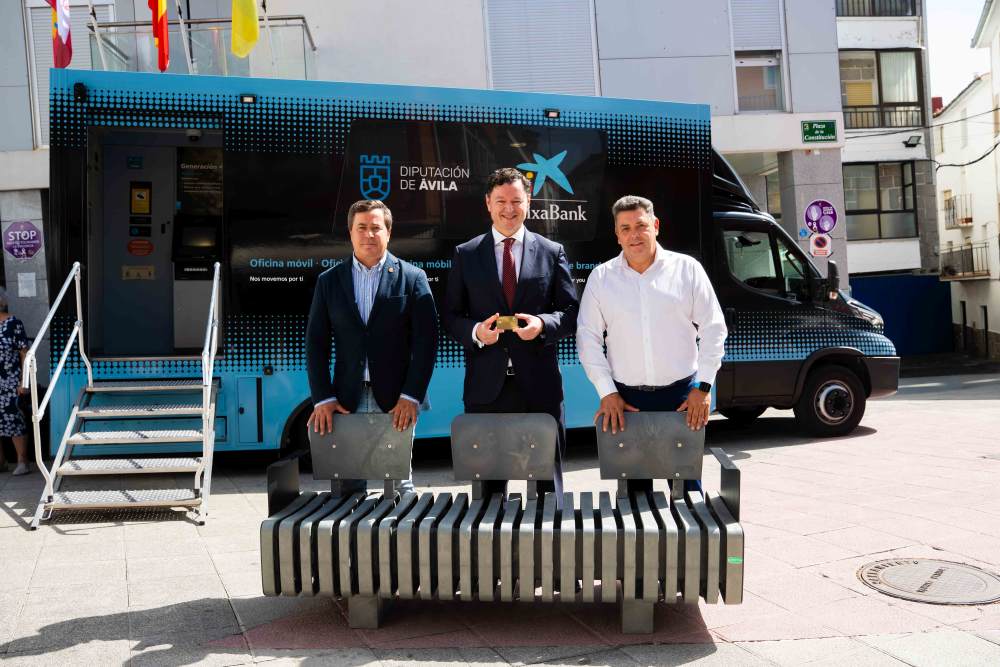
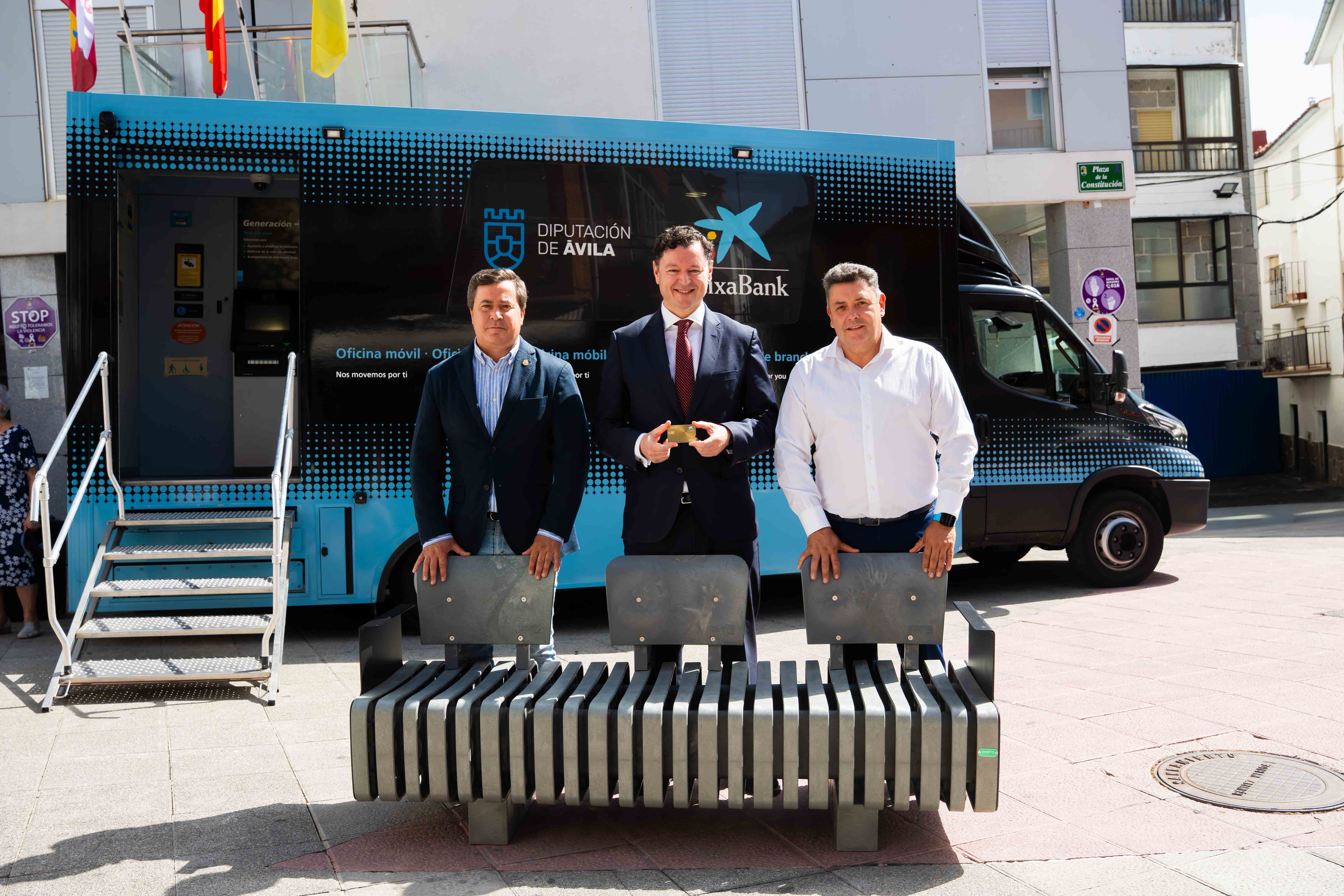
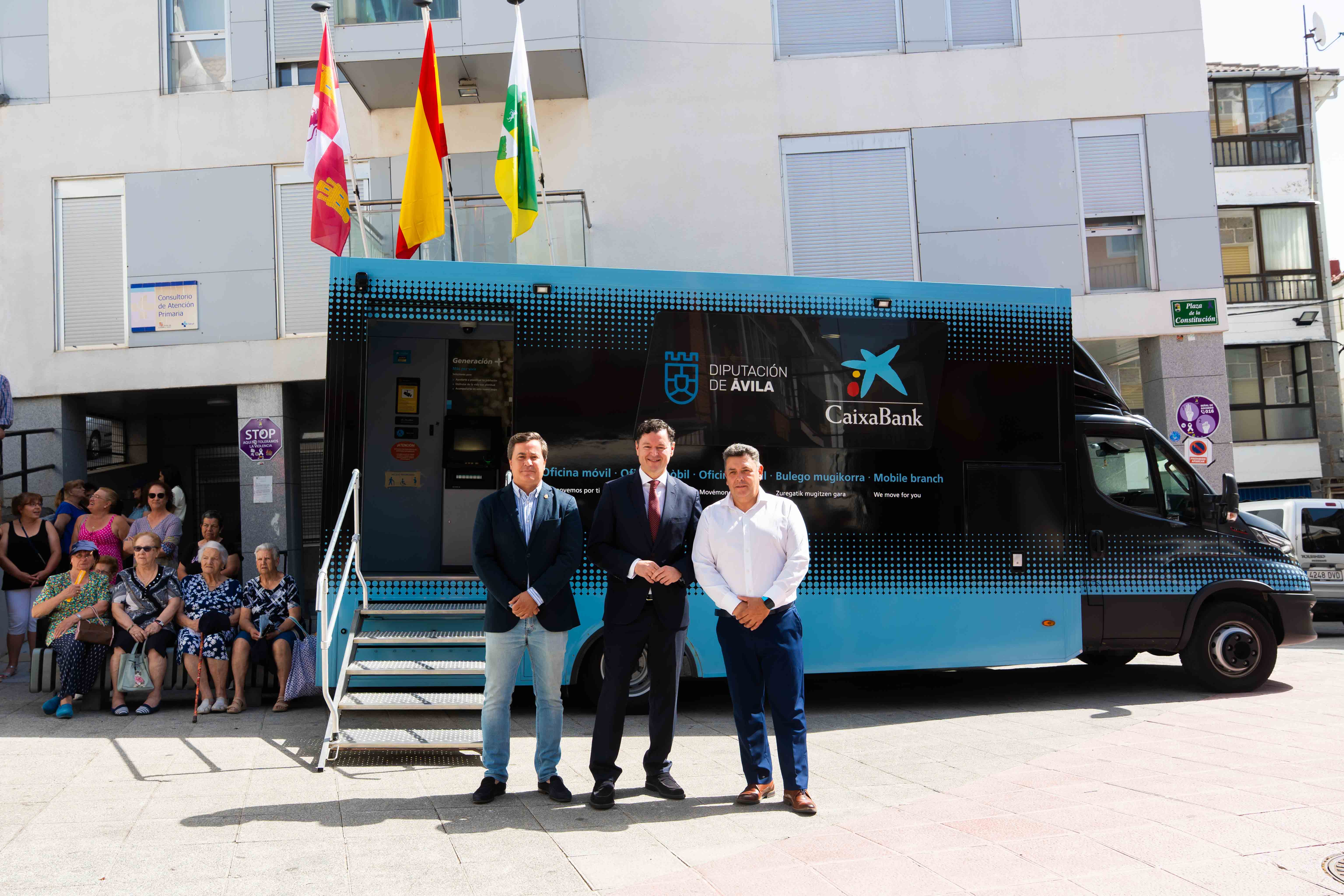
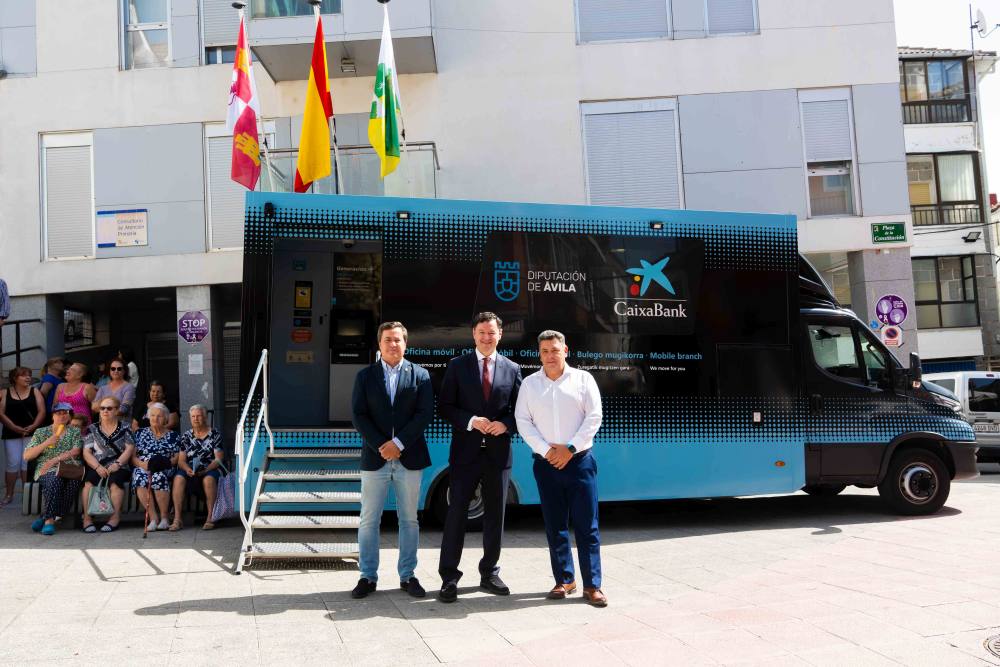
The Territorial Director of CaixaBank in Castilla y León, Gerardo Cuartero (centre); the First Vice President of the Provincial Council of Ávila, Jesús Martín (left), and the Mayor of Serranillos, Carlos Cayuela (right), with one of the benches made from recycled cards.
The Territorial Director of CaixaBank in Castilla y León, Gerardo Cuartero (centre); the First Vice President of the Provincial Council of Ávila, Jesús Martín (left), and the Mayor of Serranillos, Carlos Cayuela (right), with one of the benches made from recycled cards.
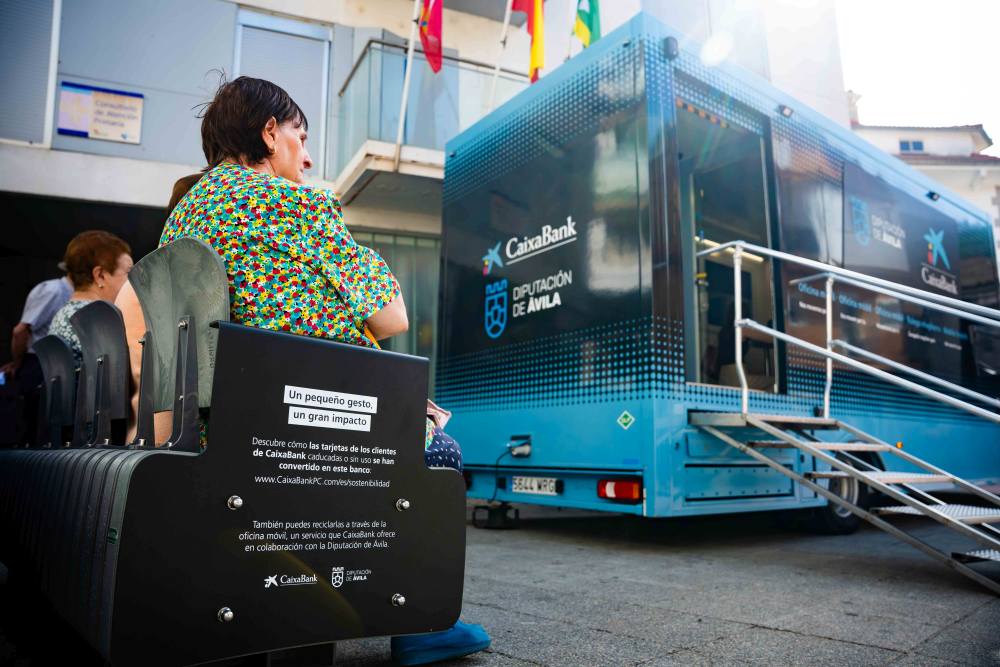
- The bank has installed one of the first 40 benches in the village of Serranillos (Ávila). The benches will be placed in public squares in villages across the province where its mobile banking branches make scheduled stops.
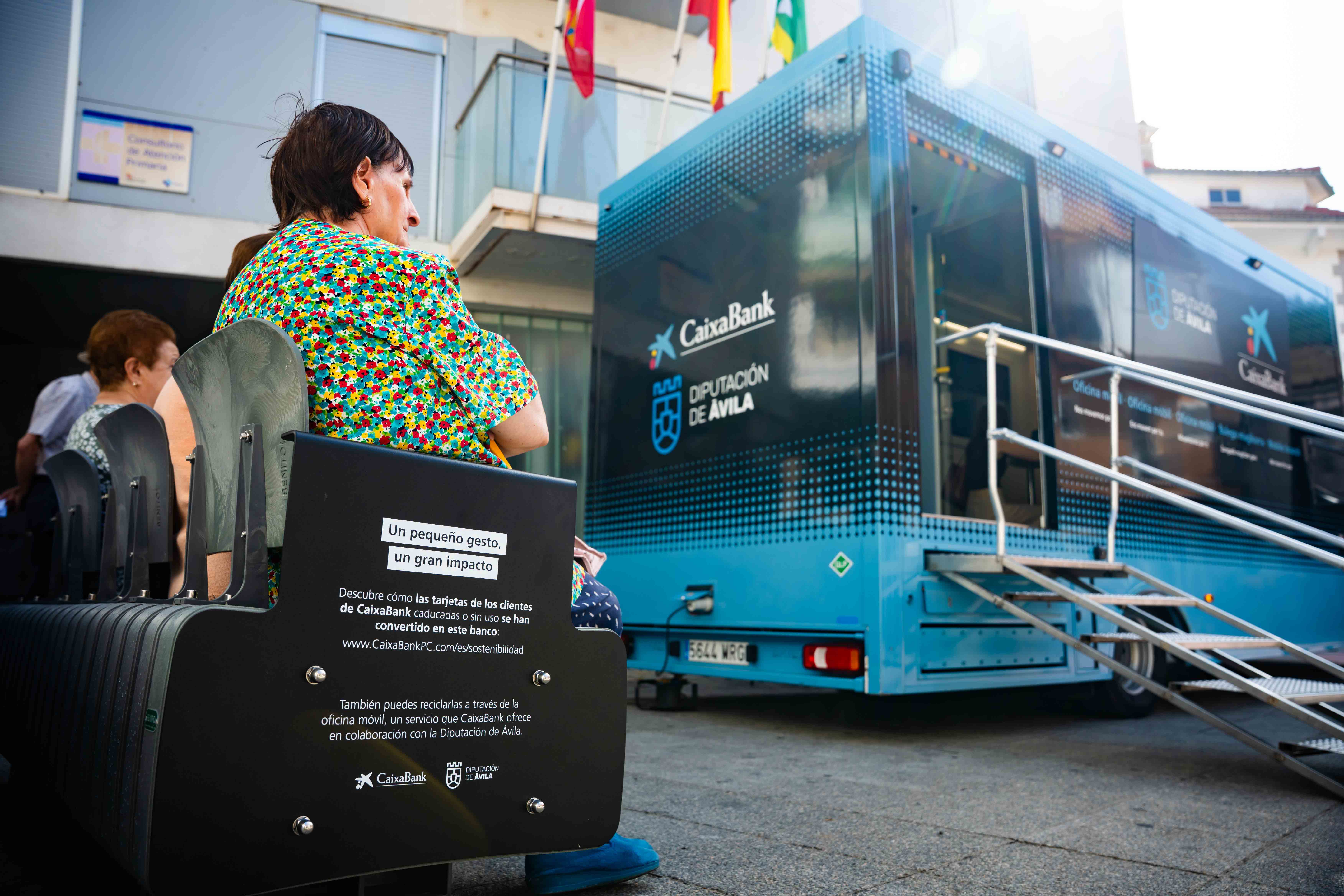
- The street furniture is made from plastic recovered from customers’ expired bank cards.
- The national launch of the initiative was attended by CaixaBank’s Regional Director for Castile and León, Gerardo Cuartero; the First Vice President Provincial Council, Jesús Martín; and the Mayor of Serranillos, Carlos Cayuela.
- Ávila became the first province in Castile and León to achieve full financial inclusion following an agreement reached between CaixaBank and Ávila Provincial Council to extend the mobile banking service to 227 communities with no permanent bank branch or where access to financial services is limited, benefiting almost 34,000 residents.
CaixaBank has today installed in the village of Serranillos (Ávila) one of the first 40 benches made from plastic recovered from customers’ expired bank cards. The benches will be installed in villages across the province where the bank’s mobile branches stop and where waiting facilities are needed.
The launch was attended by CaixaBank’s Regional Director for Castile and León, Gerardo Cuartero; the First Vice President Provincial Council, Jesús Martín; and the Mayor of Serranillos, Carlos Cayuela. Also present were CaixaBank’s Head of Sustainable Business Products Coordination, Álvaro Colino, together with the bank’s Heads of Institutional Banking in Ávila, Óscar Hernáez and José Luis Unzueta.
Since 2019, CaixaBank has collected expired bank cards and given them a second life through recycling. To date, it has recycled 4.6 million cards, equivalent to 23 tonnes of plastic. Moreover, since 2024, more than half a million customers have received a notification informing them that their expired or unused cards have been recycled, helping to raise awareness of the circular economy.
The initiative also champions the reuse of existing materials while reducing the need for new resources. CaixaBank was already one of the first financial institutions to manufacture its bank cards entirely from recycled material and is now giving those cards a second life through a project with clear social benefits.
Gerardo Cuartero, CaixaBank’s Regional Director for Castile and León, said: “This initiative enhances the experience of people waiting for our mobile banking service, bearing in mind that 70% of users are over the age of 65, while also improving accessibility and helping to create more socially inclusive public spaces. At CaixaBank, we are committed to making our business greener, more socially responsible and more sustainable.”
According to the First Vice President Provincial Council, Jesús Martín: “These benches symbolise the pride we take in the fact that financial exclusion no longer exists in rural Ávila. We cannot expect people to remain in our smallest villages unless they have access to essential services, and banking services are among them,” adding that “the shared commitment shown by the Provincial Council and CaixaBank is an excellent example of how public-private partnership is essential to ensuring genuine quality of life in rural communities.”
The benches, which CaixaBank has donated to the local councils, have been manufactured by a certified and approved supplier in accordance with the technical recommendations set out in the Accessible Transport and Mobility Guide. They feature a straight-backed design with armrests and back support. Each batch of cards sent to the manufacturer is accompanied by an official certificate guaranteeing full traceability of the material and its proper handling throughout the entire recycling process.
Working together to promote financial inclusion
This agreement between CaixaBank and Ávila Provincial Council builds on the partnership established at the beginning of 2025, which ensured full financial inclusion across the province through the bank’s mobile banking service, according to the 2025 Observatory on Financial Inclusion in Spain, produced by IVIE in collaboration with the Spanish banking associations AEB, CECA and UNACC. Full financial inclusion was achieved after extending the service to 227 villages across the province with no permanent bank branch or where access to financial services is restricted, covering almost 34,000 residents.
This made Ávila the first and only province in Castile and León to achieve full financial inclusion through four mobile banking branches, which travel more than 11,000 kilometres each month across the province.
The mobile banking service enables CaixaBank customers and non-customers alike to carry out their most common banking transactions, including cash withdrawals, cash deposits and the payment of bills and taxes, in villages with no permanent bank branch or where access to financial services is limited. Around 70% of users are aged over 65, underlining CaixaBank’s commitment to supporting older people.
Castile and León has the widest mobile banking coverage provided by CaixaBank anywhere in Spain. Through 11 mobile branches travelling almost 32,000 kilometres each month, the bank provides financial services to 631 communities across the region, serving almost 130,000 residents.
Supporting the UN Sustainable Development Goals
The recycled bench initiative is a further show of CaixaBank’s commitment to the United Nations Sustainable Development Goals (SDGs) by combining environmental and social objectives. In particular, it contributes to SDG 10 – Reduced Inequalities. The mobile banking service is a key tool in ensuring access to financial services in rural communities and helping to reduce territorial inequalities by catering to people’s banking needs regardless of where they live. The installation of the recycled benches complements this service by embedding circular economy principles into the customer experience while enhancing its social impact.
CaixaBank’s commitment to financial inclusion in rural communities has garnered international recognition. Notably, its mobile banking service has been honoured by the World Savings and Retail Banking Institute (WSBI) through its SDG Awards, which recognise financial institutions that make an outstanding contribution to the Sustainable Development Goals through initiatives that promote financial inclusion, sustainable development and positive social impact. The bank has also recently renewed the certification of its mobile banking service model, confirming the quality, continuity and social impact of the service. This recognition cements CaixaBank’s status as a leader in financial inclusion and underlines the value of complementary initiatives such as the installation of benches made from recycled bank cards.