


 Caixabank (Go to Home)
 Print page
16 July 2025, 09:00h
|
min read
SUSTAINABILITY
National
CaixaBank, MicroBank, and Edinor are promoting Local Energy Communities with 20 operations valued at 18.5 million euros, aiming to supply more than 20,000 homes and businesses in Spain
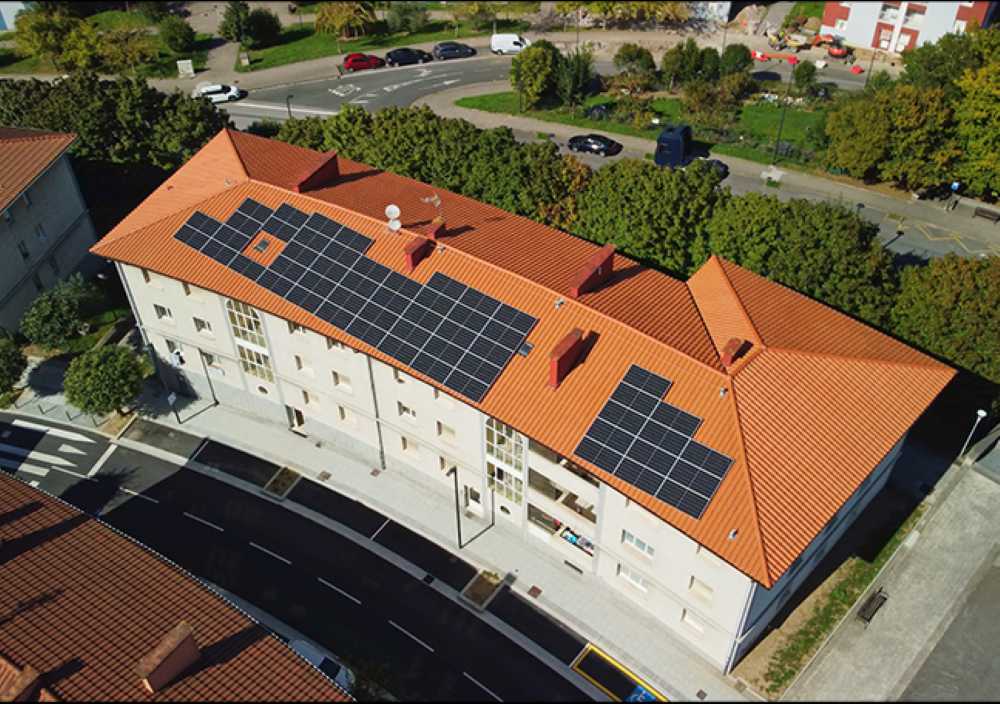
One of the first local energy communities in Zumarraga
One of the first local energy communities in Zumarraga
- Through this collaboration, 20 Local Energy Communities have been supported across various autonomous communities, enabling more than 20,000 homes and businesses to be supplied with renewable energy and avoiding over 81,800 tons of CO₂ emissions per year, equivalent to the amount absorbed by around 327,000 trees.
- MicroBank, CaixaBank’s social bank, frames this initiative within its commitment to an inclusive energy transition, aiming to bring green energy closer to all citizens and reinforcing its dedication to sustainability and financial inclusion.
- This initiative is part of CaixaBank’s 2025–2027 Sustainability Plan, which aims to mobilize 100 billion euros in sustainable finance to accelerate the energy transition and promote a fairer and more accessible model.
CaixaBank, through MicroBank, and Edinor, a subsidiary of Repsol, have jointly promoted the creation of Local Energy Communities (LECs) in Spain, starting for Euskadi in 2021 and expanding the model nationwide. This collaboration focuses on bringing renewable energy closer to households and small businesses, especially in medium and small municipalities, through a fairer, more participatory, and sustainable model aimed at fostering decarbonization and the energy transition.
Local Energy Communities (LECs) are a new form of collaboration between individuals, businesses, and public administrations that choose to come together to collectively generate and share renewable energy. By installing solar panels on the rooftops of public or private buildings, energy is distributed through self-consumption among the members of the community who live or work in the area. This model allows citizens to move from being mere consumers to also becoming producers of their own clean, local energy. It is a way to advance toward a fairer, more sustainable, and community-based energy transition.
Moreover, LECs have a very positive local impact, as they help combat energy poverty by reducing electricity bills while also lowering CO₂ emissions through solar energy generation. They are designed to include vulnerable families as well. At the same time, they strengthen community ties and create local employment opportunities.
First project and evolution since 2021
This collaboration between CaixaBank, MicroBank, and Edinor brings together two key strengths: the technical expertise and the LEC model developed by Edinor, a Repsol subsidiary specialized in energy communities and the financial capacity of the CaixaBank Group, in turn supported by the European Investment Fund (EIF) through various guarantee programs, which are key to the success of the project.
The first project of this collaboration was launched in Zumárraga in 2021. With the support of MicroBank and the European Investment Fund, 350 solar panels were installed over a surface area of 1,100 m². One year later, this energy community already had an installed solar capacity of 160 kWp, enough to supply 180 homes and small businesses. In addition to the environmental impact of avoiding 675 tons of CO₂ per year, members today enjoy an average savings of 30% on their electricity bills.
Since then, the Local Energy Communities project promoted by both entities has grown steadily. Currently, 20 energy communities have already been financed across Spain: 13 are operational, 4 are under construction, and 3 have recently been signed in Segovia, Cambra Ebre (Tortosa) and Sevilla.
In total, more than €18.5 million has been mobilized, mainly through MicroBank, CaixaBank’s social bank. Specifically in Seville, the financing has been complemented with European sustainable investment funds, where CaixaBank has also offered loan lines for VAT advances and subsidies, thus reinforcing its commitment to sustainability, energy inclusion, and alignment with the decarbonization and energy transition goals set by the European Union.
Once all the projects are up and running, the total installed capacity will reach 13,089 kW, which will allow renewable electricity to be supplied to more than 20,000 homes and businesses. This production will avoid the emission of 81,847 tons of CO₂ per year, an amount comparable to what would be captured by more than 327,000 trees over 25 years, equivalent to an area of approximately 460 football fields.
MicroBank and CaixaBank, sustainable finance with social impact
CaixaBank, through its social bank MicroBank, plays a key role in facilitating access to Local Energy Communities (LECs). Thanks to its financial support, many families and small businesses can participate in these communities without cost being a barrier.
Through this innovative public-private collaboration model, municipalities and their residents form an association in which the municipality provides its rooftops for the installation of solar panels. The residents and businesses then benefit from the energy produced through shared self-consumption, saving on their electricity bills and actively contributing to the shift toward more sustainable energy generation. This would not have been possible through traditional financing, as these are newly created associations with new projects and no other guarantees or financial track record.
CaixaBank, a European leader in sustainability
CaixaBank is an institution with a strong historical commitment to the social impact of its activity, bearing the responsibility of driving a positive economy for the well-being of people.
Following the presentation of its 2025–2027 Sustainability Plan, which is part of CaixaBank’s Strategic Plan, the bank has committed to mobilizing €100 billion in sustainable finance to continue advancing toward a more sustainable economy and to support the economic and social development of individuals. It does so by financing projects in renewable energy, clean mobility, and energy-efficient buildings, offering solutions that accelerate the sustainable transition of businesses and families, promoting financial inclusion, supporting education and employment, and responding to the challenges posed by increasing longevity.
In line with its climate commitment, CaixaBank is also working to reduce CO₂ emissions associated with its financial activity, especially in high-emission sectors such as energy, transport, and construction, among others. Its clear goal is to achieve net-zero emissions by 2050 and to drive decarbonization and the energy transition toward a more sustainable economy.
As a result, CaixaBank stands out in the evaluations of major global analysts and rating agencies that assess sustainability management, performance, transparency, and integration into business strategy, including S&P Global (DJSI), Fitch (ESG Entity Ranking), MSCI, CDP, ISS ESG, Sustainalytics, and FTSE4 Russell.


