Caixabank (Go to Home)
 Print page
26 April 2026, 10:00h
|
min read
SUSTAINABILITY
SOCIAL COMMITMENT
National
The OECD Business and Industry Advisory Committee identifies CaixaBank as an international benchmark in financial education
Finance for young people
Finance for young people
- The report prepared by Business at OECD (BIAC) highlights CaixaBank’s comprehensive strategy to deliver financial education to a range of stakeholders, including training for young people and courses for entrepreneurs
- Improvements in financial literacy are estimated to translate into GDP growth of 0.3% in advanced economies, driven by higher savings, lower levels of debt and more responsible investing habits
CaixaBank has been selected as one of the featured case studies in the report The Business Case for Financial Literacy, promoted by Business at OECD (BIAC), the organisation representing the business community internationally before the Organisation for Economic Co-operation and Development (OECD). The report will be presented at international bodies such as the United Nations Economic and Social Council (ECOSOC).
In the report, the OECD business committee underscores the importance of financial education. It also sets out the measures being implemented by organisations worldwide to promote financial literacy. CaixaBank is the only Spanish financial institution included by the OECD as a success case, alongside Funcas and the Spanish Confederation of Savings Banks (CECA), and is cited as a model to follow for its comprehensive financial education strategy, which reaches different groups and sectors of society.
Comprehensive financial education to reach different audiences
Among the main international initiatives, the report highlights several CaixaBank programmes:
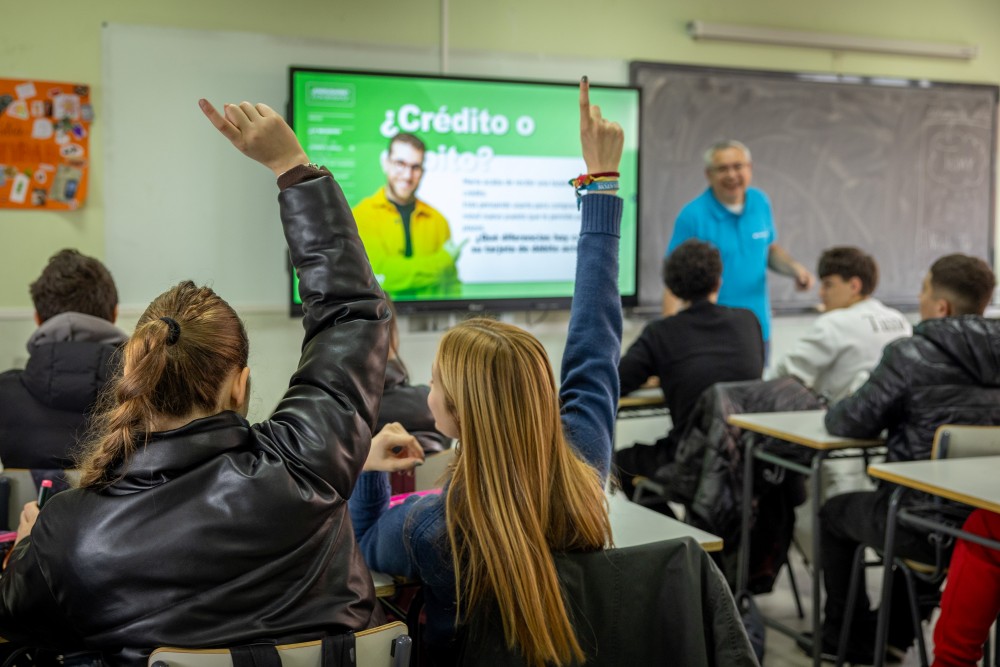
- Finanzas para Jóvenes (Finances for Young People): A volunteering programme aimed at secondary school students, designed to teach basic financial concepts and support responsible decision-making.
- Aula CaixaBank: An educational platform for the bank’s shareholders, encouraging informed and active participation in the company.
- MicroBank Academy: An online training platform for entrepreneurs offering around 100 courses in digital skills and business management.
- imaginAcademy: A digital financial education ecosystem aimed at young people, providing practical content through apps and school programmes.
Through this strategy, CaixaBank has embedded financial education within its overall business approach, promoting responsible decision-making in areas such as saving, entrepreneurship and investment. CaixaBank’s initiatives support decisions on saving, entrepreneurship and investment, and enhance the financial resilience of individuals and SMEs.
Financial education contributes to stronger economic development
The Business at OECD document notes that improvements in financial education can have a direct impact on macroeconomic stability and on reducing the risks of over-indebtedness and fraud.
According to the report, higher levels of financial literacy can reduce household loan default rates and lower debt-to-income ratios, thereby contributing to greater economic resilience and improved individual wellbeing.
It is estimated that improvements in financial literacy could translate into GDP growth of 0.3% in advanced economies, driven by higher savings, reduced borrowing and more responsible investing habits.
The document also shows that financial education should begin at an early age, as students with strong financial skills are 66% more likely to save regularly and 45% more likely to compare prices. However, data from the 2022 PISA assessment, included in the OECD report, indicate that efforts in this area need to be strengthened, as 26% of students do not even reach a basic level of financial competence.