Caixabank (Go to Home)
 Print page
24 March 2026, 09:00h
|
min read
CORPORATE
ENTREPRENEURSHIP AND BUSINESSES
SUSTAINABILITY
National
MicroBank contributed to the creation of over 30,000 jobs and helped nearly 10,000 entrepreneurs set up their businesses in 2025
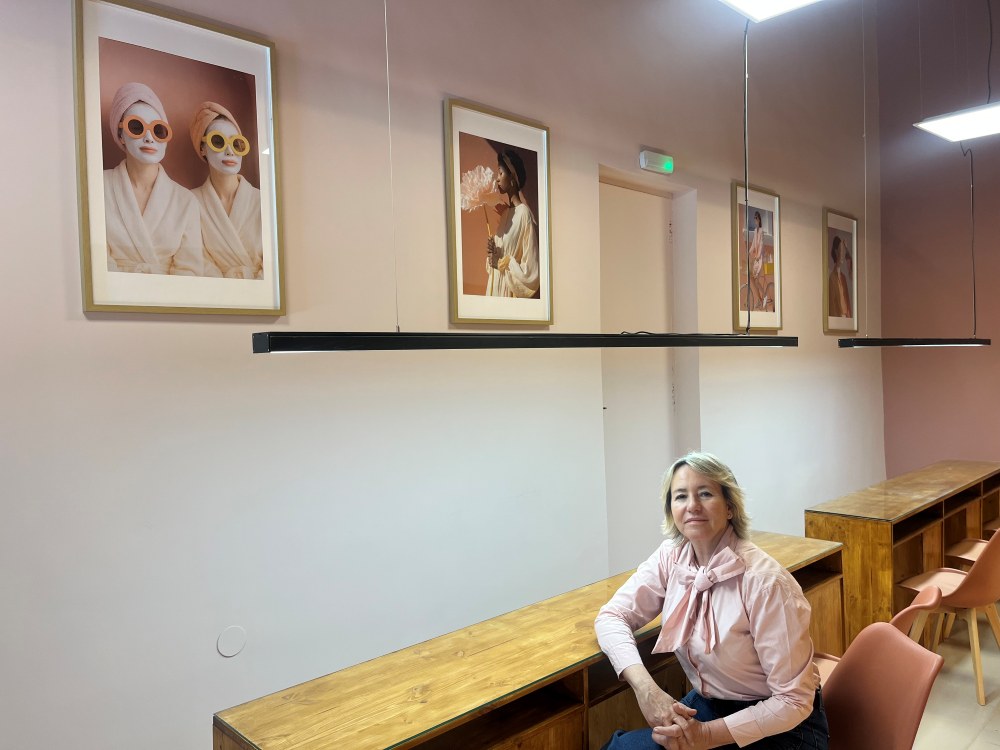
Entrepreneur Helena Prats at her beauty coworking space, The Pink Philippa
Entrepreneur Helena Prats at her beauty coworking space, The Pink Philippa
- MicroBank granted 30,506 microloans to entrepreneurs, with a total financing value of €662.4 million, 19% more than in 2024
- 49% of these businesses created new jobs after receiving funding, with a positive impact on vulnerable groups
- Microloans to families, with 243,970 transactions in Spain and a 21% increase compared to the previous year, accounted for the bulk of MicroBank’s financing in 2025, totalling €1.67 billion
- Overall, the bank closed 2025 with 277,819 operations, representing a total value of nearly €2.5 billion, up 19% in transactions and 18% in financing compared to 2024
Supporting entrepreneurs and microenterprises drives job creation whenever financing barriers are overcome. In 2025, over 30,500 entrepreneurial initiatives received financial backing from MicroBank, CaixaBank’s social bank, with €662.4 million allocated to create and consolidate businesses—a 19% increase over the previous year—according to the bank’s 2025 MicroBank Annual Report.
These figures highlight how microloans are a key tool for promoting entrepreneurship and enabling the launch of viable business projects. Notably, in 2025 the average loan provided by MicroBank to entrepreneurs was €21,713. While starting a business always requires support -33% of the requested financing was for launching projects-, it is worth noting that 67% of microloans were aimed at expanding or consolidating existing businesses.
The social impact of this financing is reflected in the creation of 30,170 jobs and the support of 9,941 new entrepreneurial projects. These numbers underscore MicroBank’s contribution to the labour market, since 49% of the businesses supported by the bank generated new jobs after receiving funding. It is particularly significant that 44% of these hires were women, 59% were under 35 years old, and 29% were individuals reentering the workforce, reinforcing MicroBank’s commitment to equal opportunity and to promoting talent that plays a key role in economic and social development.
“These results confirm that our support for entrepreneurship translates into thriving businesses and job creation. They are tangible indicators of the positive impact microloans can have on people’s lives and the economy as a whole”, says Cristina González, CEO of MicroBank.
The services sector and retail trade, the main drivers of employment
Most of the jobs created by businesses financed by MicroBank are concentrated in the services sector (58%), followed by retail (13%) and construction (7%). Other sectors, such as primary industries, hospitality, new technologies, and various activities, account for the remaining 22%, reflecting the diverse impact of microcredits on the economy.
As for the geographic distribution, the regions with the highest demand for entrepreneurial loans are Catalonia (26%), Andalusia (20%), Madrid (16%), and Valencia (9%).
In terms of entrepreneur demographics, the average age is 44, and as for origins, 62% are Spanish, 22% from Latin America, and 8% from other European countries, among other backgrounds.
Beyond economic support, non-financial services are a key tool for advising entrepreneurs. In this regard, MicroBank, the social bank of CaixaBank, offers the MicroBank Academy, a free educational platform that supports entrepreneurs. It offers nearly 100 online courses—ranging from digital skills and AI to business management—organised according to the key phases: starting, growing, and consolidating a business. With content from MicroBank and partners such as Google and Accenture, in 2025 the platform surpassed 50,000 visits, reaffirming MicroBank’s commitment to entrepreneurship not only through financing but also by providing training and tools to support projects.
Promoting female entrepreneurship
MicroBank’s 2025 Report also highlights the bank’s commitment to promoting female entrepreneurship. lIn 2025, the bank granted 7,423 microcredits to women-led businesses, with financing totaling €145.8 million, a 13.3% increase compared to 2024. This supported the creation of 2,890 new women-led businesses, which in turn generated 7,341 jobs.
Supporting families
In addition to promoting entrepreneurship, MicroBank’s financial support for families reached €1.67 billion in 2025 (with an average loan amount of €6,852), a 19% increase over 2024. A total of 243,970 microcredits were granted, 21% more than the previous year, representing 87.2% of the bank’s operations.
The most common reason for loan requests in 2025 was housing-related expenses (furniture, equipment, or renovations), accounting for 33% of cases. This confirms that household expenses remain the most frequent reason for applying for a microcredit, with a 37% increase compared to 2024 (when housing-related loans represented 24% of total loan requests).
The second most common purpose in 2025 was for the purchase or repair of vehicles, accounting for 19% of loans. Other personal and family expenses represented 15% of loan requests. Finally, invoices and taxes accounted for 12.5% of microcredit requests, down 21.8% from 16% in 2024.
Thus, support for entrepreneurship and families remains MicroBank’s areas of greatest social impact. This is complemented by other financing in socially impactful areas such as education, energy transition, and social enterprises, among others.
Overall, MicroBank’s positive 2025 performance is reflected in its activity: the bank closed the year with 277,819 operations, with a total value of nearly €2.5 billion, representing increases of 19% in operations and 18% in financing compared to 2024.
Social banking
MicroBank offers solutions to different segments of the population whose financial needs are not sufficiently met. MicroBank plays a key role in the Sustainable Banking Plan, integrated into CaixaBank’s new Strategic Plan, where it promotes financial inclusion and strengthens socio-economic growth across the country.
As the sole shareholder of MicroBank, CaixaBank has supported its social bank since its creation by giving it the funding required to grow its lending activity while marketing MicroBank products through CaixaBank’s extensive commercial network, with the aim of offering customers its entire range of products with the highest possible quality of service and the best possible relationship. More than 280 entities across Spain actively collaborate in granting loans, contributing their knowledge of the borrowers, as well as providing advice and monitoring the projects. MicroBank also receives support from leading European institutions dedicated to promoting entrepreneurship and microfinance, namely the European Investment Fund (EIF), the Council of Europe Development Bank (CEB), and the European Investment Bank (EIB).