


 Caixabank (Go to Home)
 Print page
30 September 2025, 10:00h
|
min read
CORPORATE
National
The agri-food sector consolidates its third consecutive year of growth despite the challenge of U.S. tariffs, according to CaixaBank Research
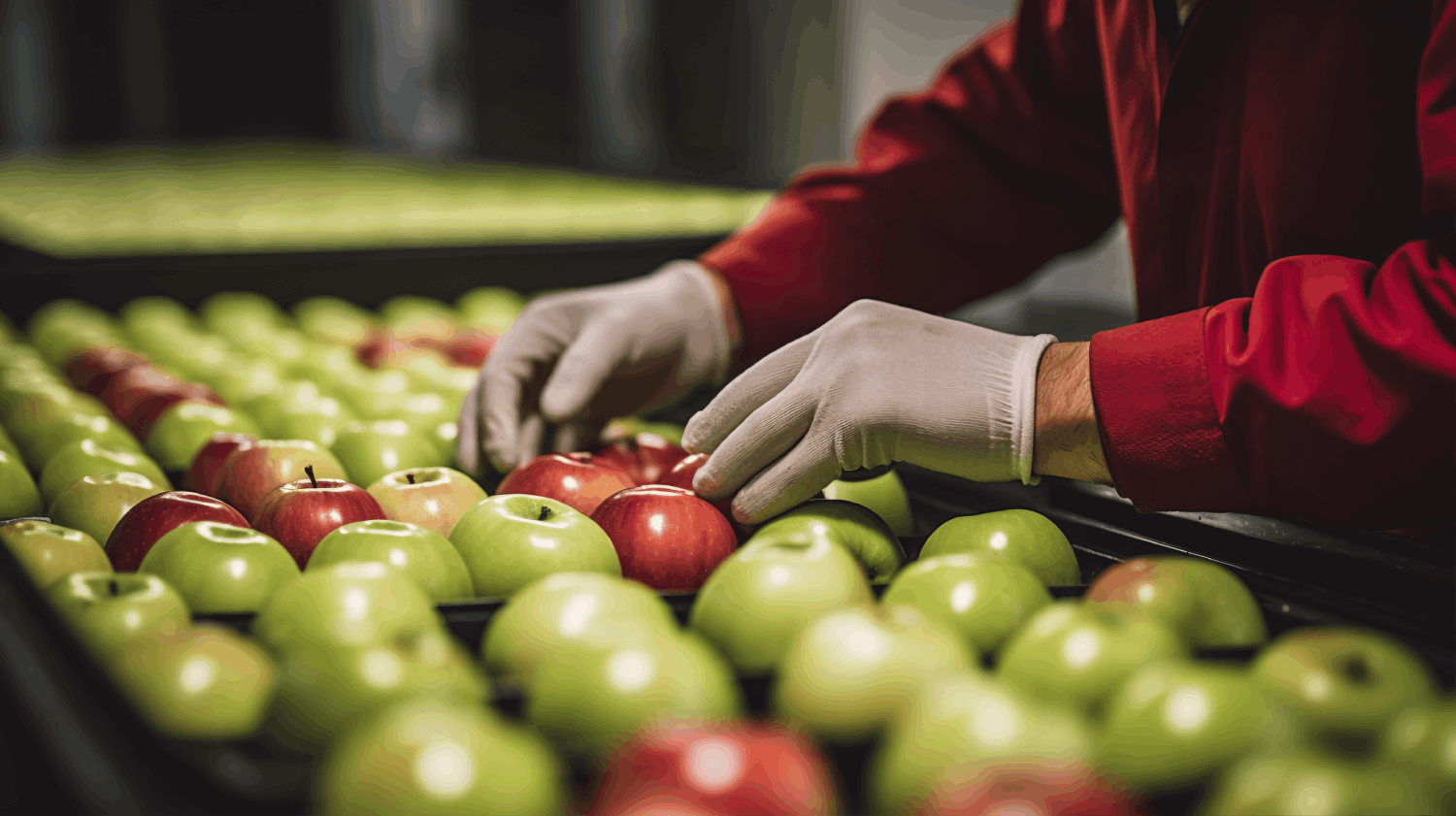
The agri-food sector consolidates its third consecutive year of growth
The agri-food sector consolidates its third consecutive year of growth
- The CaixaBank research service indicates that the Spanish agri-food sector presents a marked expansive tone in 2025, initiated in mid-2023, after overcoming the consequences of the prolonged drought
- The protectionist shift in markets such as the U.S., but also in the UK and China, forces the reinforcement of the geographical and commercial diversification strategy
- Spain emerges as the fourth largest agri-food exporter in the EU and the eighth worldwide, with a share of 3.4%. This progress is supported by the recovery of production after the drought, solid international demand, and high competitiveness
- CaixaBank Research notes a growing trend towards industrialization, with a progressive increase in the weight of food processing compared to the primary sector, especially in territories such as Madrid, Catalonia, and the Valencian Community
The Spanish agri-food sector presents a marked expansive tone in 2025 and consolidates the growth path initiated in mid-2023, as reflected in the CaixaBank Research Agri-Food Sector Report. Thus, the containment of production costs, the improvement of weather conditions, and the rebound in demand are favoring a sustained increase in both production and exports, which are already at pre-pandemic levels. The agri-food industry also shows a very favorable trend, highlighted by the reactivation of production and the dynamism of its labor market. However, significant challenges persist, such as improving the sector's resilience to the increased frequency of extreme weather events associated with climate change and growing commercial protectionism.
Despite the recorded growth, the greater dynamism of the overall Spanish economy means that the weight of the primary sector has not yet recovered to pre-pandemic levels. In the first half of the year, its weight remains around 2.7% of the Spanish economy, compared to around 3.0% in the pre-pandemic period.

Improvement in food industry production
The recovery of agricultural production is also reflected in an improvement in food industry production, which grew by 1.4% year-on-year in the first half of 2025, a very positive figure, according to CaixaBank Research. This progress consolidates the reactivation recorded in 2024, so that food industry production is already around pre-pandemic levels.
In this context of recovery, but also of great challenges, agri-food exports maintain notable dynamism. The CaixaBank research service indicates that, in the first half of 2025, they grew by 5.0% in volume and 5.6% in value, far exceeding the growth of total exported goods. Despite recent challenges, Spain thus consolidates itself as the fourth largest agri-food exporter in the EU and the eighth worldwide, with a share of 3.4%.
This progress is supported by the recovery of production after the drought, solid international demand, and high competitiveness. However, the evolution is not without risks: the fall in prices of some key products, such as oils and fats, the stagnation of the exported volume of fruits, and the impact of the protectionist shift in markets such as the UK, the U.S., and China, force the reinforcement of the geographical and commercial diversification strategy.
Complex commercial environment
According to the CaixaBank Research report, the Spanish agri-food sector faces a more complex commercial environment, with new tariff barriers, especially in the U.S. and China, affecting sensitive products such as olive oil, dairy products, and vegetables. Although direct exposure is limited, some products have a high dependence on these markets. In this scenario, the trade agreement between the EU and Mercosur emerges as a strategic opportunity to open new export channels, especially in products such as fruits, wine, pork, and olive oil. However, it also poses competitive challenges in sectors such as beef or sugar, so agile adaptation of the business fabric will be key.
Internally, the agri-food sector remains an economic and territorial pillar. Although its weight in the national gross value added (GVA) has slightly decreased in recent decades – from 5.5% in the 2000s to 4.9% in 2022 – it maintains strategic relevance thanks to its role as a driver of international competitiveness, territorial cohesion, and strategic autonomy. In CaixaBank Research's estimate of the GVA of the agri-food sector (primary sector and food and beverage industry), regional differences are analyzed. Among many conclusions – such as the leadership of Andalusia, Castile and León, and Catalonia in contributing to the sector – the CaixaBank research service observes that the sector is especially important in the economies of Extremadura, La Rioja, and the two Castiles, and notes a growing trend towards industrialization, with a progressive increase in the weight of food processing compared to the primary sector, especially in regions such as Madrid, Catalonia, and the Valencian Community.
The Agri-Food Sector Report and CaixaBank Research
The CaixaBank Research Agri-Food Sector Report is part of the collection that studies in depth the situation and trends of the main sectors of activity of the Spanish economy, based on the monitoring and analysis of economic indicators and internal data processed using big data techniques. The collection also includes reports dedicated to the tourism sector and the real estate sector, and a Sectoral Observatory that follows the situation and prospects of the Spanish economy from the point of view of its sectors of activity in a transversal manner.
CaixaBank Research aims to promote knowledge through research and economic analysis, contributing to public debate and the dissemination of major socio-economic issues of our time, making them accessible to as many people as possible. All their studies are available on their website: www.caixabankresearch.com


