Caixabank (Go to Home)

 Print page
16 October 2026, 10:45h
|
min read
CORPORATE
SUSTAINABILITY
National
MicroBank consolidates its leadership in microfinance with 58% of the European Union's microcredit portfolio
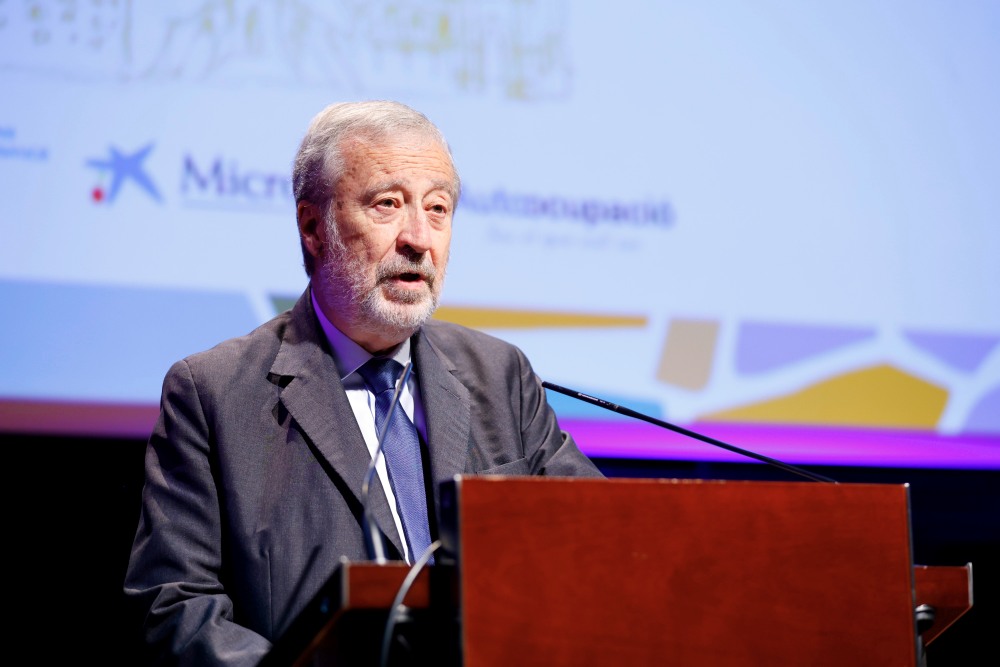
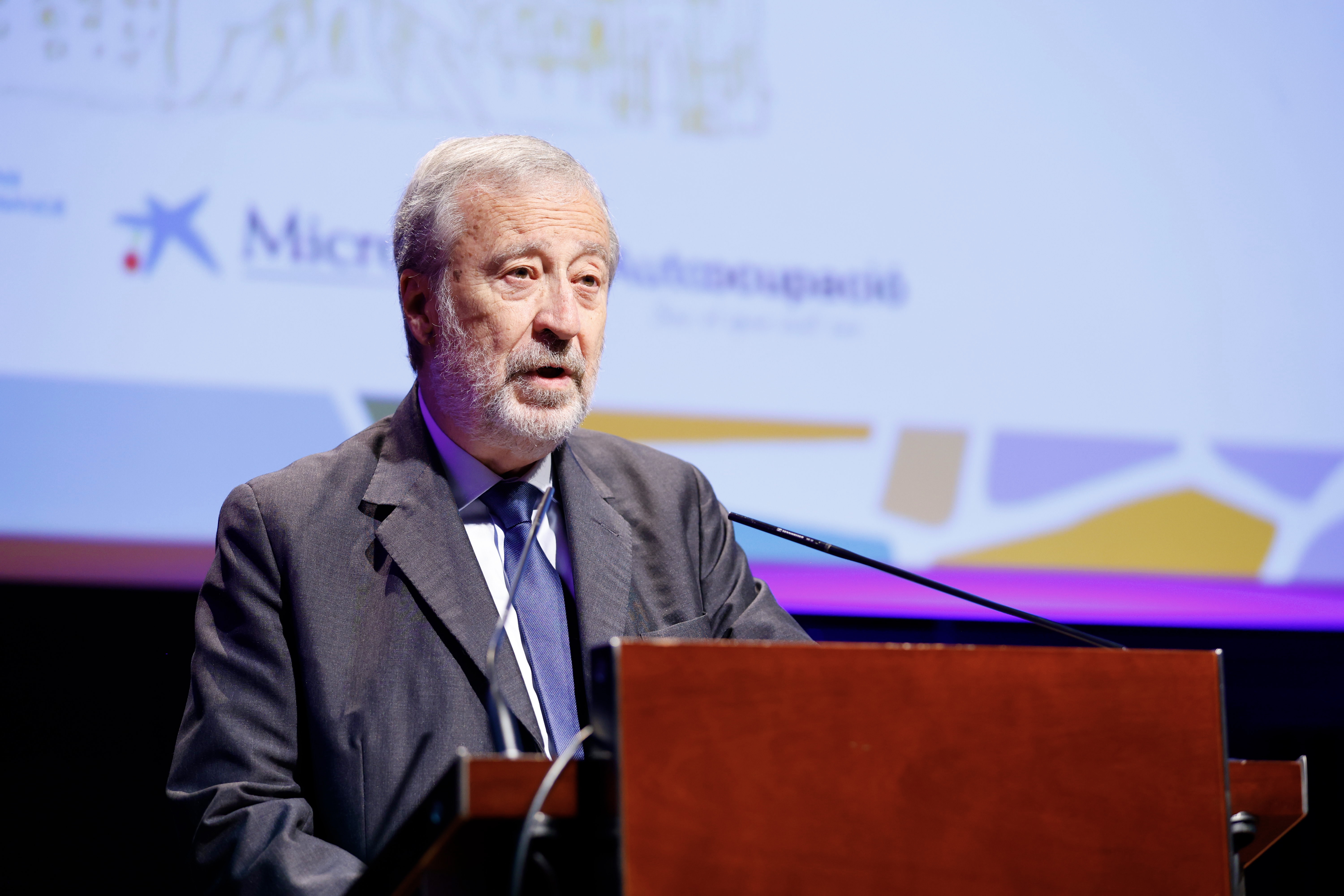
Tomás Muniesa during his speech at the European Microfinance Network Annual Conference.
Tomás Muniesa during his speech at the European Microfinance Network Annual Conference.
- Tomás Muniesa, Chairman of CaixaBank, highlights the role of microfinance in promoting entrepreneurship, equal opportunities and social cohesion at the Annual Conference of the European Microfinance Network, held in Barcelona
- CaixaBank's social bank has contributed to the creation of more than 400,000 jobs since its creation in 2007 and has formalised more than 2.1 million operations worth 16 billion euros
According to the latest data available from the 13th edition of the European Microfinance Survey, which was compiled by the European Microfinance Network (EMN) and the Microfinance Centre (MFC) and covers 2024, MicroBank is strengthening its position as a European leader in microfinance. The bank currently accounts for 58% of the microcredit portfolio in the European Union and 42% of the total in Europe.
These results highlight MicroBank's growing weight in the European microfinance ecosystem. Its share of the total volume of microloans in the European Union has grown significantly, from 52% to 58% between 2023 and 2024. The EU's leadership is evident when analysing the ranking of the five standout countries in the microcredit portfolio. Spain (58.9%) is in first place, with a considerable lead over Romania (9.4%), Poland (7.7%), France (6.4%) and Lithuania (6.1%). MicroBank accounts for over 90% of microloans in Spain, establishing it as the EU’s leading provider.
The Chairman of CaixaBank, Tomás Muniesa, highlighted the economic and social impact of MicroBank during his speech at the Annual Conference of the European Microfinance Network, held on 15 and 16 October at CaixaForum Barcelona: ”MicroBank has contributed to the creation of more than 400,000 jobs since its inception in 2007, processing more than 2.1 million transactions worth €16 billion over the course of its nearly 20-year history. These figures reflect the capacity of microfinance to boost economic activity, generate employment and expand opportunities, and that reaffirm MicroBank's role as one of CaixaBank's main instruments to promote financial inclusion and social progress".
During his speech, Muniesa also defended that "Economic progress is only truly sustainable when it is also inclusive", underlining the need to promote a financial model capable of generating opportunities and contributing to the development of territories. In addition, he highlighted how the sector is evolving and its growing economic and social relevance: "Microfinance has gone from being a response to financial exclusion to becoming an essential tool to promote entrepreneurship, autonomy and social cohesion", he said.
European microfinance exceeds 8.75 billion euros
MicroBank’s leadership comes against a backdrop of growth in microfinance across Europe. According to the latest European Microfinance Survey, which analysed the activity of 198 microcredit providers across 30 countries, microcredit financing across Europe totalled €8,754.9 million in 2024, of which €6,330.3 million corresponded to the European Union.
The study highlights the importance of microfinance as a tool for boosting the business ecosystem of small and medium-sized enterprises. Eighty-three per cent of the sector’s portfolio volume consists of financing for business activities. Specifically, 96% of business clients are self-employed individuals or micro-enterprises with up to ten employees. In addition, approximately a third of the businesses financed are newly created or have less than a year of activity.
In addition to promoting entrepreneurship, microfinance plays a vital role in providing groups that struggle to access conventional banking channels with access to finance. 75% of the entities participating in the study indicate that most of their customers had difficulties accessing the traditional financial system.
In this context, MicroBank reaffirms its commitment as a social bank to the generation of opportunities, financial inclusion and social cohesion.
Financial inclusion and social impact
Much of the debate at the Annual Conference of the European Microfinance Network, held at CaixaForum Barcelona on 15 and 16 October and organised in collaboration with Autoocupació and MicroBank, focused on information on how the sector is evolving and the challenges to expanding its economic and social impact.
The meeting brought together representatives of the main European institutions, financial institutions and experts in the sector to address the future of microfinance in a context marked by digital transformation, the ecological transition and new economic and social challenges.
Notable participants included Georgiana Buturoiu (Head of the Microfinance, Alternative Lenders and Fintech Division at the European Investment Fund (EIF)), Tomáš Boček (Deputy Governor of the Council of Europe Development Bank (CEB)) and Brigitte Fellahi-Brognaux (Head of the Social and Inclusive Entrepreneurship Unit at the European Commission).
The conference is also part of the agenda of Barcelona4Impact, an initiative that connects organisations, investors, entrepreneurs, universities and institutions committed to generating positive impact.
By hosting this event, Barcelona has become the European epicentre of the debate on microfinance and inclusive entrepreneurship for two days, reinforcing its position as a meeting point for key players in the impact economy.
European Microfinance Network (EMN)
The European Microfinance Network (EMN) is a not-for-profit organisation that promotes microfinance as a tool to combat social and financial exclusion in Europe through self-employment and the creation of micro-enterprises. The Network’s mission is to facilitate capacity building and defend the sector’s interests.
The EMN comprises microfinance professionals, partners and corporate members, including national networks, academic institutions, service providers to the sector, and banks involved in European microfinance issues who support the development of microfinance in Europe.
MicroBank, CaixaBank's social bank
MicroBank responds to different segments of the population whose financial needs are not sufficiently covered. It plays a decisive role in CaixaBank's Sustainability Plan, in which it is entrusted with the mission of promoting financial inclusion, facilitating access to credit for the most vulnerable groups, as well as strengthening its commitment to the socio-economic development of the territory.
As MicroBank’s sole shareholder, CaixaBank has supported its social bank since its inception, providing the necessary funding to grow its lending activity and marketing its products through CaixaBank’s extensive commercial network. This makes the full range of options available to customers, offering the highest possible quality of service and local presence.
More than 300 organisations across Spain also play an active role in the granting of microloans, contributing their knowledge of the loan recipients and advising on and monitoring the projects.
MicroBank also enjoys the support of leading European institutions dedicated to promoting entrepreneurship and microfinance: These are the European Investment Fund (EIF), the Council of Europe Development Bank (CEB), and the European Investment Bank (EIB).