Caixabank (Go to Home)
 Print page
26 June 2012, 00:00h
|
min read
CORPORATE
Cataluña
BARCELONA
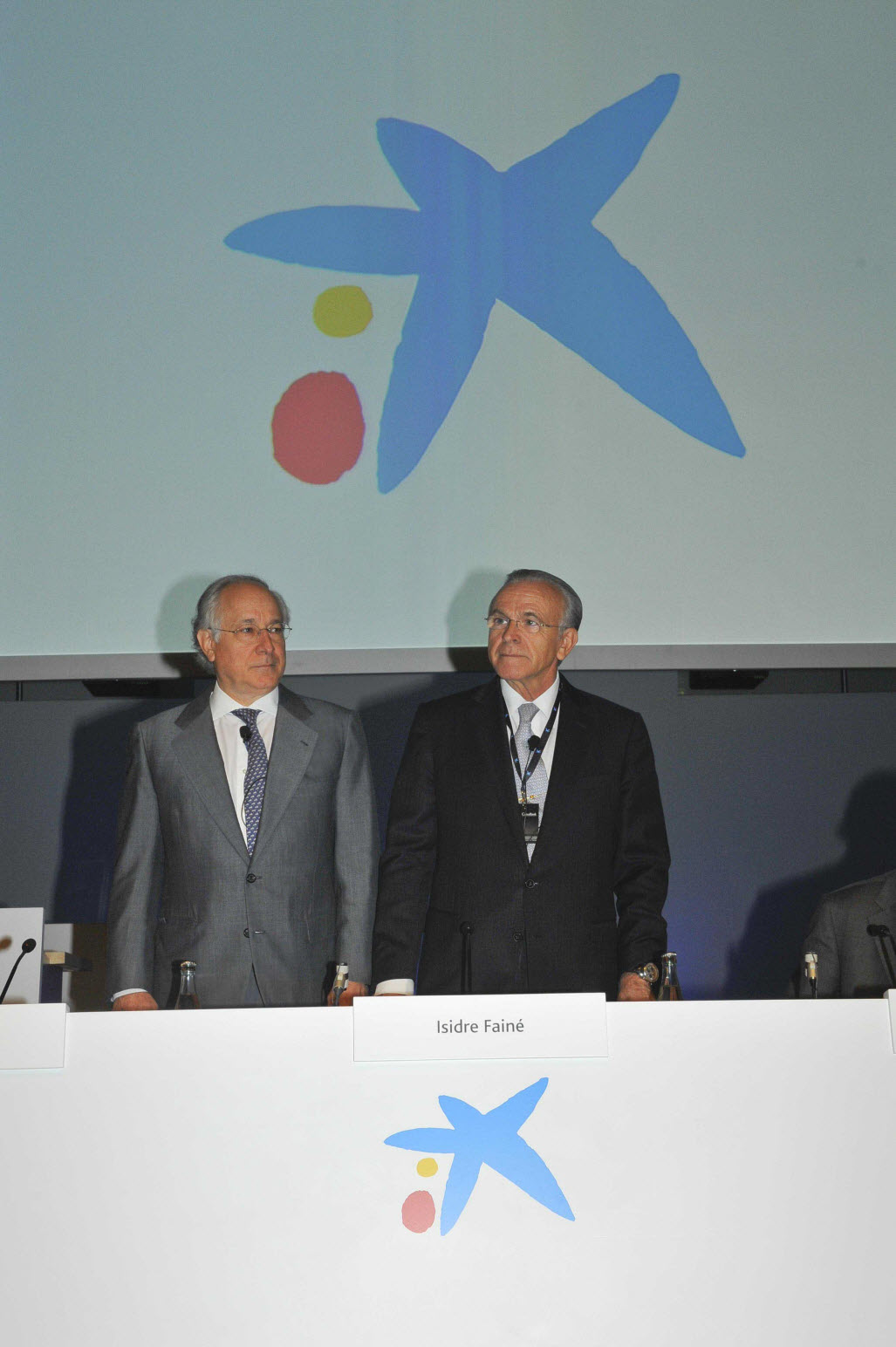
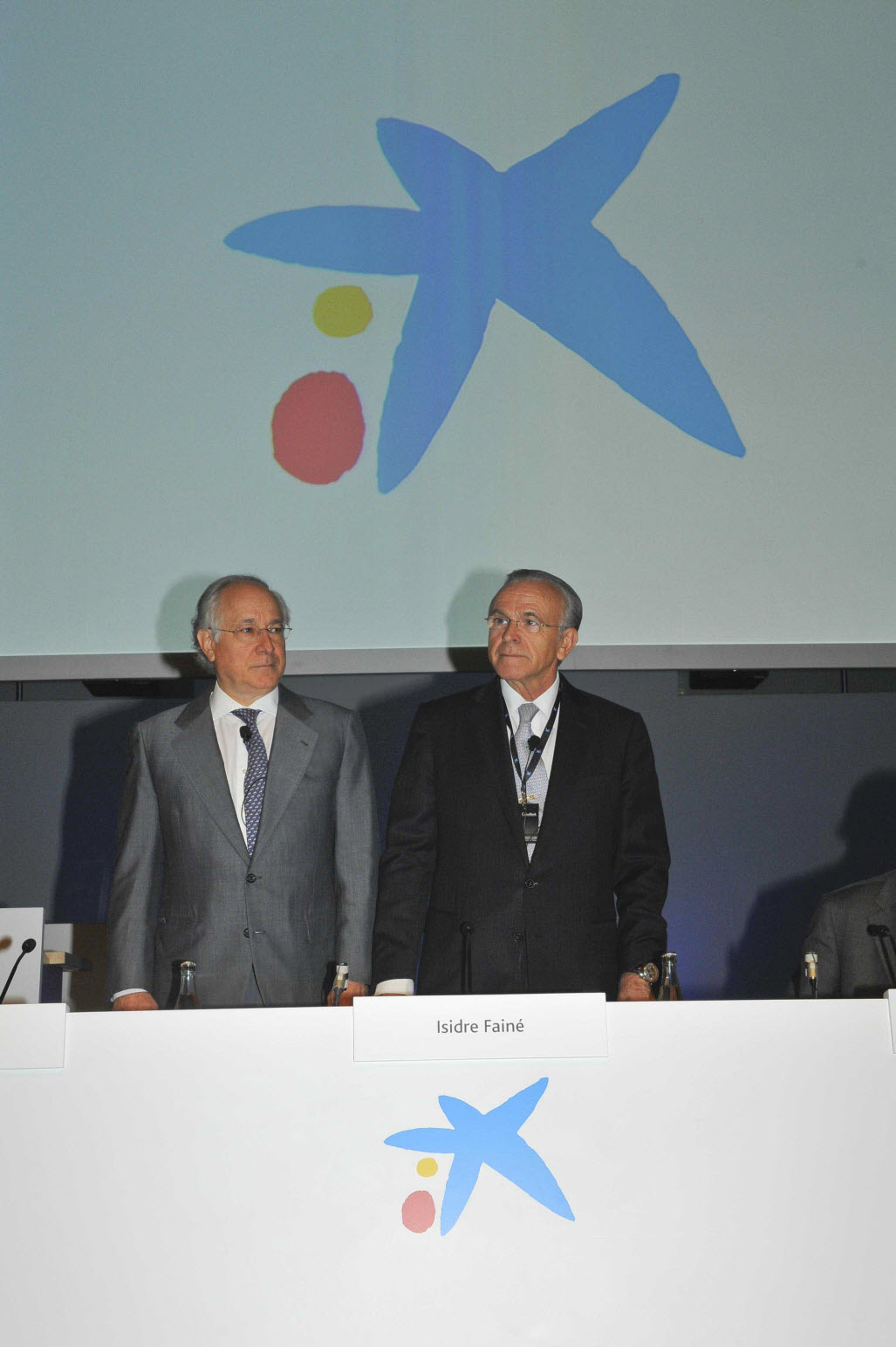
CaixaBank's Extraordinary General Assembly approves the merger with Banca Cívica
CaixaBank's Extraordinary General Assembly approves the merger with Banca Cívica
CaixaBank's Extraordinary General Assembly approves the merger with Banca Cívica
- The Chairman of CaixaBank, Isidro Fainé, has called the Banca Cívica merger a "decisive step" for "la Caixa", creating "Spain's leading bank and providing support to the country's economic development". According to Fainé, the merger reaffirms CaixaBank's commitment to the values of "leadership, trust and social engagement, which represent the foundations of our distinguished position in the Spanish financial system".
- The CaixaBank CEO, Juan María Nin, said the Banca Cívica merger would "provide a good platform for inorganic growth, for driving the bank's future and for achieving the goals laid out in our 2011-2014 Strategic Plan ahead of schedule". Nin emphasized that "the move is commercially attractive, thanks to Banca Cívica's complementary regional and business positioning".
Shareholders at CaixaBank's Extraordinary General Assembly today approved the merger by absorption of Banca Cívica. The bank, chaired by Isidro Fainé and vice-chaired and directed by Juan María Nin, was backed by a majority of shareholders, who also voted to adopt the Board's other resolutions.
Banca Cívica shareholders also approved the merger at their Extraordinary General Assembly, meaning the operation is on schedule and should be finalised over the course of the next few weeks, once regulators approve the merger.
In his speech Isidro Fainé discussed the current economic climate, saying "the current recession in Spain presents significant challenges, with the depth of the turmoil now calling into question some of the foundations of our political, economic and social system".
The CaixaBank Chairman admitted that "austerity and reforms" were required, but that the country also needed "optimism and a willingness to build a stronger future, with a more robust growth model, firmer European integration and more responsible behaviour and engagement". Fainé emphasised "the full commitment of the CaixaBank team to the future of this institution and the nation".
The Chairman went on to discuss the benefits of the Banca Cívica merger, highlighting the importance of the bank's Welfare Projects amid the current economic turmoil, calling this work "more vital than ever before and a true hallmark of our institution".
Referring to Banca Cívica, Fainé is particularly proud to undertake a merger with a bank "that shares "la Caixa"'s social values and has a firm footing in the local regions of each of the savings banks incorporated into Banca Cívica". Fainé again pointed out that the merger sees CaixaBank "reaffirm its values of leadership, trust and social engagement, which represent the foundations of our distinguished position in the Spanish financial system".
A strategic operation and business model continuity
The merger will create the leading bank in the Spanish market, with more than 13 million customers and assets of 342bn, of which 231bn are loans. Total customer funds stand at 305bn, of which 179bn are deposits.
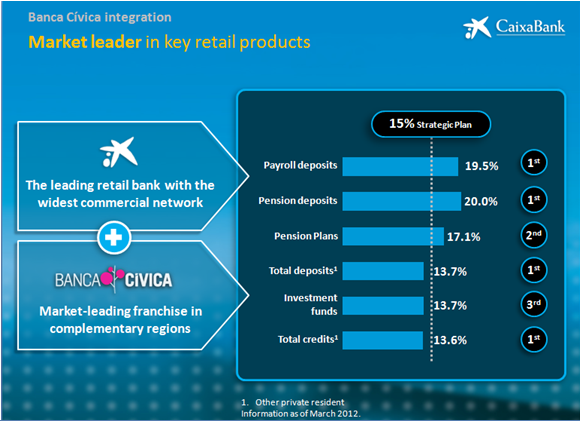
For Isidro Fainé, "as well as the good strategic sense of the operation, the move is also financially very positive for shareholders", thanks to "earnings per share increasing by more than 20% as of 2014, with return on capital employed exceeding 20% and annual cost savings of 540mn".
The Banca Cívica merger will require no public funds, nor will it come at any cost for the rest of the financial sector thanks to CaixaBank's financial resources and Banca Cívica's good risk coverage, following a write down of assets prior to the merger with CaixaBank.
Fainé added that the operation "creates value for all stakeholders: for CaixaBank shareholders, for customers and for society in general". Fainé added "it will also create a bank with the power to invest more funds in projects that benefit the economy as a whole, all while coming at no cost to taxpayers or the rest of the banking industry".
Targets of the 2011-2014 Strategic Plan met ahead of schedule
CaixaBank's CEO, Juan Maria Nin, stated that Banca Cívica represents "around 25% of our balance sheet, holds a strong position in regions that complement "la Caixa"'s regional coverage and brings with it 3 million customers". This means "Banca Cívica presents us with a solid platform for inorganic growth, to drive the bank forward and achieve the goals laid out in our 2011-2014 Strategic Plan ahead of schedule".
In his speech to shareholders, the CaixaBank CEO pointed out that the merger with Banca Cívica represents "a strategic operation for CaixaBank, providing us with a better costs structure at a time of financial turmoil and stronger revenue growth".
"The operation is commercially attractive, thanks to Banca Cívica's complementary regional and business positioning", concluded Juan María Nin.
Both the Chairman and the CEO extended their welcome to the approximately 85,000 Banca Cívica shareholders that will be joining CaixaBank, which expects to close the year with a total of 800,000 shareholders.
A solid position amid banking reforms
With regard to compliance with Royal Decree-Law 18/2012, concerning the write down and sale of real estate assets, CaixaBank has reported that it would be able to absorb an impact of 2.1bn thanks to its strong operating earnings, which in the first quarter stood at 889mn, up 25.3% against the previous year, while it is also able to generate capital gains via the balance sheet.
With regard to Banca Cívica provisions, CaixaBank estimates total gross provisions of 3.4bn for fair value adjustments to Banca Cívica's balance sheet prior to the merger, to be recorded net of taxes against Banca Cívica's provisions. Given that adjustments to fair value vastly exceed Banca Cívica's additional provision requirements of 1.29bn, CaixaBank does not anticipate that said provisions will have any significant additional impact either on assets or solvency.
In any case, the impact of the merger will be manageable thanks to CaixaBank's excellent capital position, with the bank maintaining ratios that exceed the minimum capital requirements demanded by Basel II and III and by the European Banking Authority.
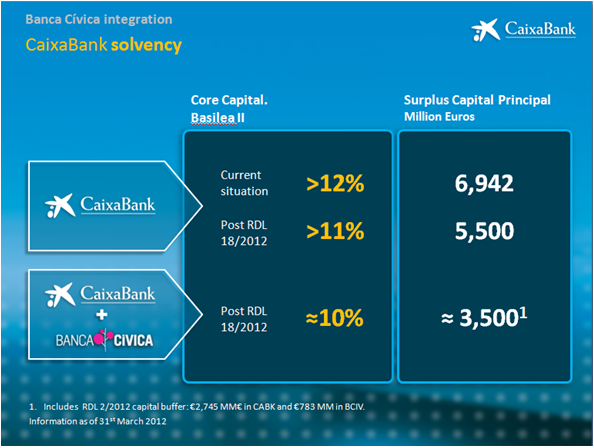
The CEO also discussed the appraisal of Spanish banks conducted by independent international auditors and their report released on 21 June. Juan María Nin highlighted that fact that "CaixaBank, including the merger with Banca Cívica, was one of 3 banks found to require no additional capital under the stress scenario".
Juan María Nin attributed this to the bank's "provisions and capital management, in accordance with prevailing legislation, using advanced capital models and particularly our solid financial position, thanks to the hard work and vision of our staff".
Other resolutions adopted at the Extraordinary General Assembly
CaixaBank's Extraordinary Shareholders Assembly, the first meeting of which was held today, saw all other resolutions proposed by the Board of Directors adopted.
These included the incorporation of five new proprietary directors (Eva Aurín, Maria Teresa Bassons, Javier Ibarz, Antonio Pulido and Enrique Goñi) into the Board of Directors, made up of 19 members.
The assembly also ratified changes to the issue of mandatorily convertible subordinated bonds, which originated from a preferred stock swap, in order to make the conversion easier optional every 6 months until 30 December 2015 - and to increase the remuneration offered, up from 6.5% to an annual nominal rate of 7%.
CaixaBank also announced its intention to leave its 2012 dividend unchanged at 0.231 euro per share. CaixaBank will also maintain its quarterly shareholder remuneration policy, combining cash dividends with its scrip dividend program. This program has been well received by shareholders in the past, with 94.72% of shareholders choosing to receive the scrip dividend in September 2011.